
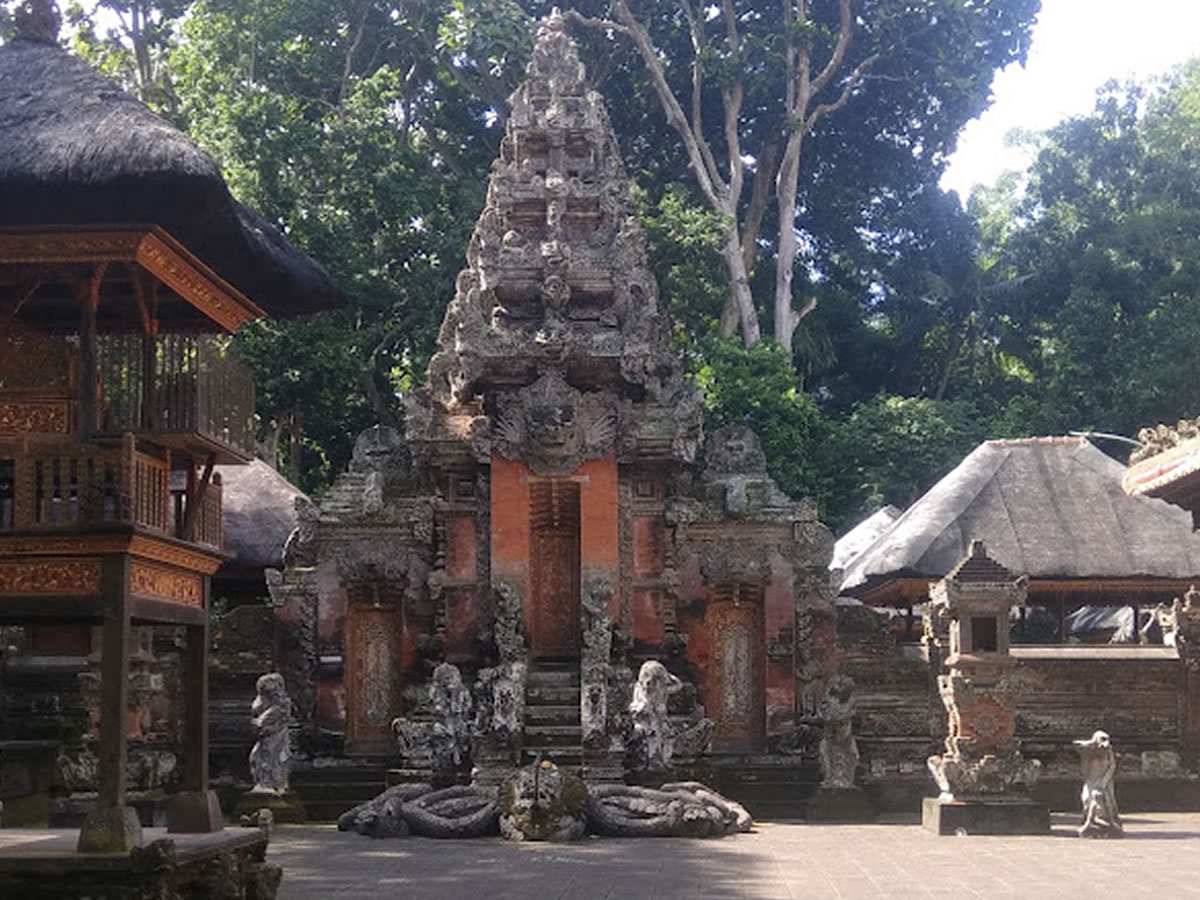
10 best temple in Ubud you should visit, Ubud has several iconic Hindu temples offer a mix of holy spring waters, ancient rock-cut shrines, and beautifull sand stone carving surrounding the temple. As Ubud’s recognized cultural and spiritual heart, the temples in and around the region offer a distinct experience rooted in local traditions and unique natural settings. Rather than being isolated concrete structures, Ubud’s temples are built directly into the surrounding natural landscape.
Ubud Dalem Temple is a significant Balinese Hindu temple dedicated to Lord Shiva in his manifestation as the force of destruction and renewal. Situated along the main street in Ubud, it is widely recognized for its striking traditional architecture and deep spiritual atmosphere. The temple courtyard frequently serves as a venue for evening traditional Balinese dance performances, including the Kecak and Fire Dance.
The Dalem Temple Ubud ceremony anniversary known locally as Piodalan is celebrated every 210 days is according to the Balinese Pawukon calendar. Specifically, the main festival falls on the day of Anggara Keliwon Medangsia (Tuesday Keliwon of the week Medangsia).
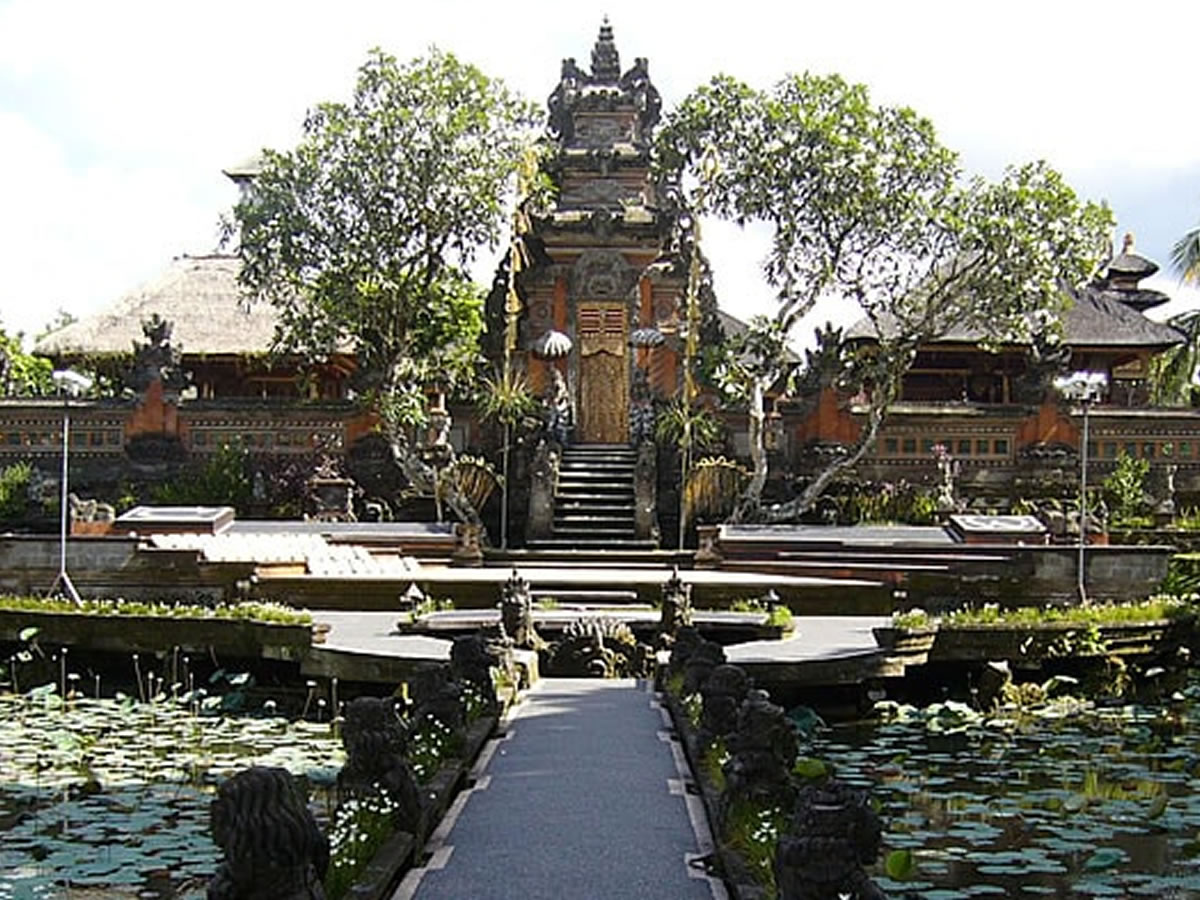
Saraswati Temple known as the Ubud Water Palace or Pura Taman Kemuda Saraswati is a iconic Balinese Hindu temple dedicated to Dewi Saraswati, the goddess of knowledge, literature, and the arts. Located in the heart of central Ubud just off the main road, it is best known for its grand lotus ponds and elegant classical stone architecture. Hosts traditional Balinese dance performances, such as the Legong Dance, in the front amphitheater during the evening.
The Temple anniversary celebrated every 210 days on the day of Saniscara Keliwon Landep (Saturday Keliwon of the week Landep).
Dalem Agung Temple at Monkey Forest Padang Tegal Ubud is the primary temple of the dead located at the southwestern edge of the Sacred Monkey Forest Sanctuary in Padangtegal, Ubud. Dedicated to Lord Shiva, this temple holds deep religious importance for the local Padangtegal village community. The Temple situated within the dense jungle of the Sacred Monkey Forest Sanctuary, surrounded by banyan trees and inhabited by wild Balinese long-tailed macaques. The Temple anniversary celebrated every 210 days on the day of Soma Wage Prangbakat (Monday Wage of the week Prangbakat).
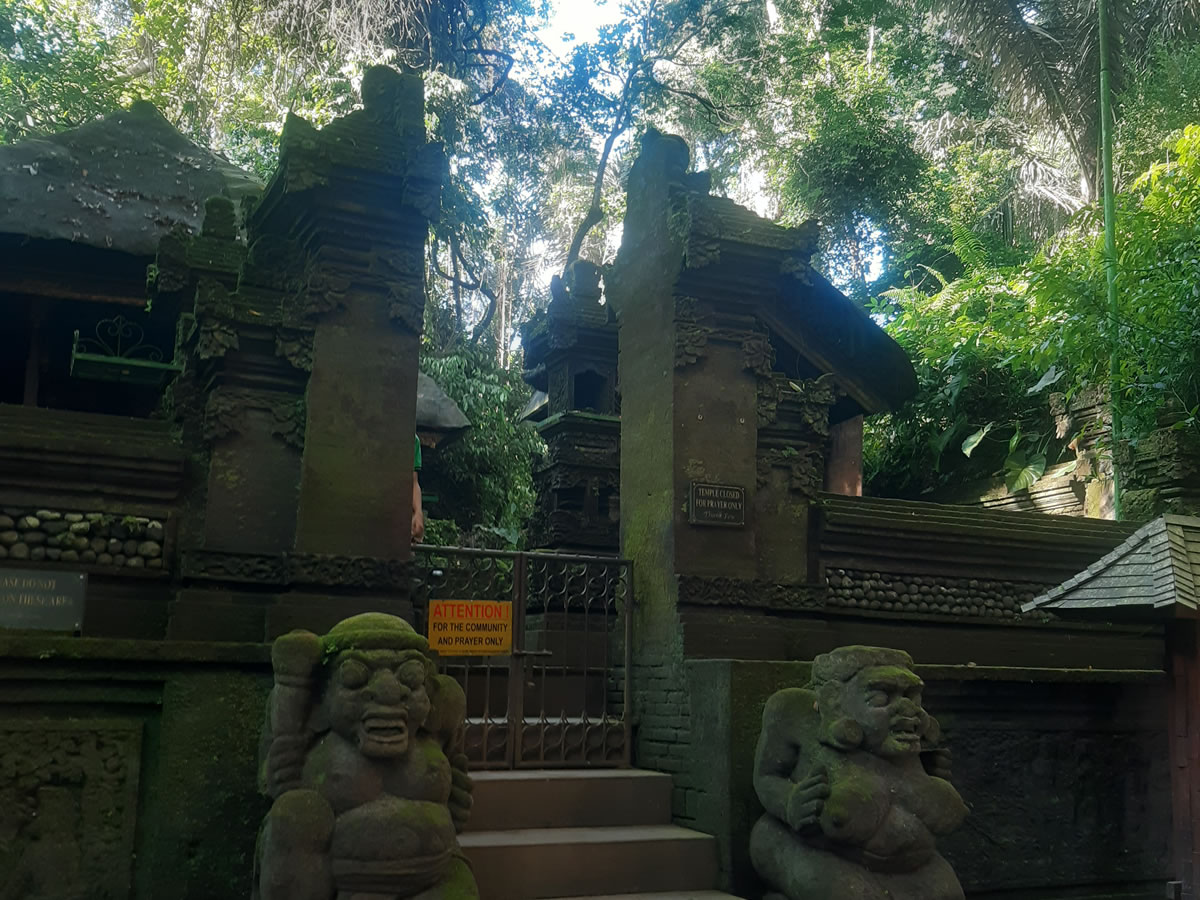
Goa Gajah or Elephant Cave is a historic archaeological complex and spiritual site located in Bedulu, just southeast of central Ubud. Dating back to the 9th century, this UNESCO World Heritage Tentative List site seamlessly blends both Hindu and Buddhist heritage. The iconic shallow cave entrance is carved with a menacing face (often identified as the demon Kala or a protective giant), designed to ward off evil spirits as worshippers step inside. Behind the main cave compound, steps descend into a quiet valley containing streams, rainforest trails, and ancient moss-covered Buddhist stupa relics.
The Temple anniversary celebrated every Anggara Kasih Prangbakat (Tuesday Keliwon of the week Prangbakat). A sacred Tuesday occuring every 210 days on the Balinese Pawukon Calendar.
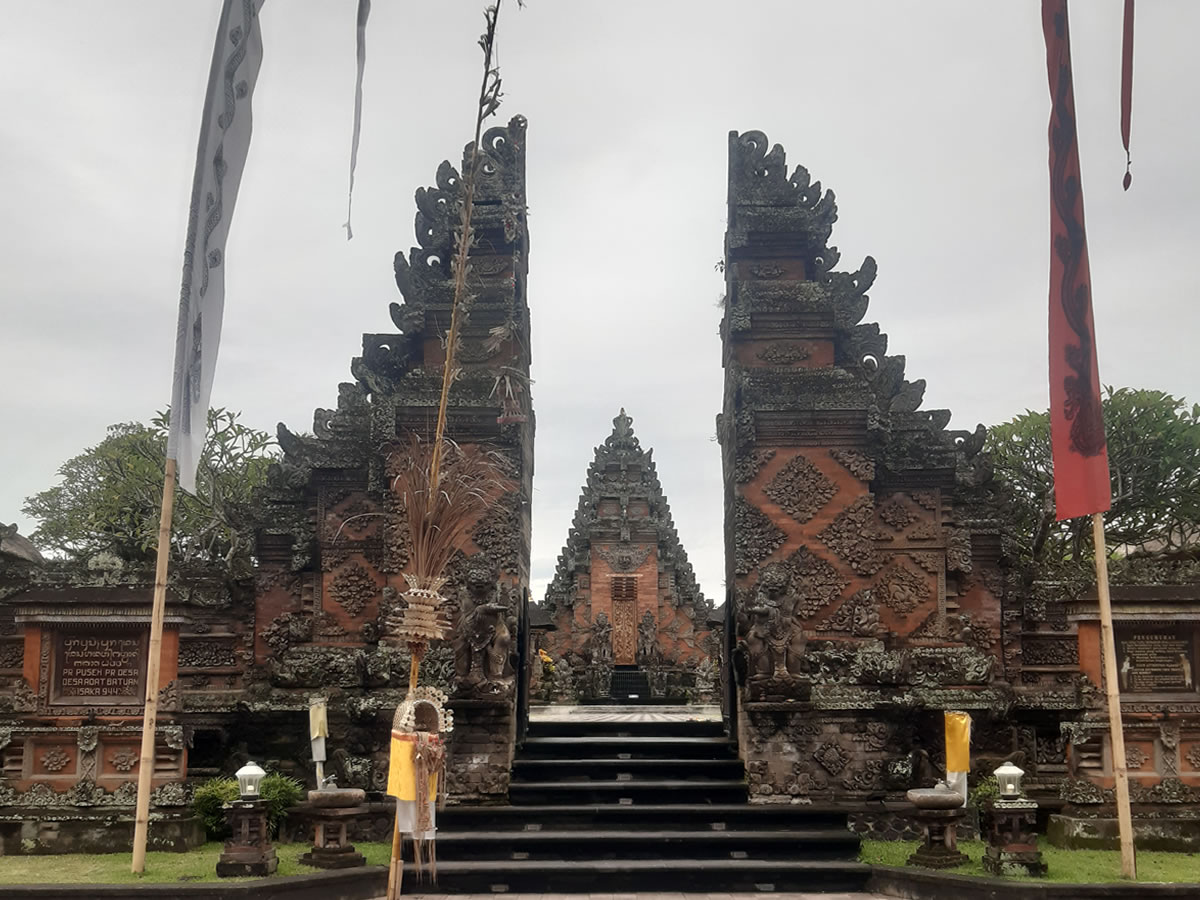
Puseh Batuan Temple is one of the oldest and most historic temples in Bali, located in Batuan Village, Sukawati District, Gianyar Regency—approximately a 20-minute drive from Ubud Center. The temple is estimated to have been established in 1022 AD (944 Saka), making it a significant relic of the Old Balinese era. Pura Puseh is part of the Kahyangan Tiga concept, which comprises the three main village temples that serve as the spiritual centers of Balinese community life. The Temple anniversary celebrated every 210 days on the day of Saniscara Keliwon Wuku Wariga (Tumpek Uduh).
Pura Penataran Sasih is one of Bali’s most important archaeological and religious temples. Located in the village of Pejeng, about 6 km east of Ubud, the temple is famous for housing the Moon of Pejeng, the largest single-cast bronze kettle drum in the world, believed to date from around 300 BC to 200 AD. According to Balinese legend, the Moon of Pejeng was once a wheel from the chariot of the moon god that fell from the sky and became stuck in a tree. Archaeologists, however, identify it as an ancient ceremonial drum from the Dong Son culture of Southeast Asia.
The temple has 2 type of anniversary the small one known locally as Penyelah is celebrated every 210 days is according to the Balinese Pawukon calendar falls on the day of Redite Umanis Langkir. The main ceremony celebarted every year according Balinese Lunar Calendar falls on Purnana (Full Moon) Kesanga, 9th month according of Balinese Calendar.
Gunung Kawi is one of Bali’s most impressive ancient temple complexes and archaeological sites. Located near Tampaksiring, about 30 minutes from Ubud, it is famous for its monumental shrines carved directly into the cliffs of the Pakerisan River Valley.
Dating from the 11th century, Gunung Kawi is believed to have been built during the reign of King Anak Wungsu of the Balinese Warmadewa Dynasty. The site features ten massive rock-cut candi (shrine monuments), some reaching 7 meters in height, carved into the sandstone cliffs.
The Gunung Kawi Rock-Cut Temple in Tampaksiring, Gianyar, celebrates its anniversary every the holy day of Purnama Katiga (the third full moon of the Balinese calendar). On this day, the temple is beautifully and festively decorated for ancestral worship.
Tirta Empul is one of Bali’s most sacred Hindu temples, renowned for its holy spring water used in traditional purification rituals (melukat). Located in Tampaksiring, about 15 km northeast of Ubud, the temple was founded in 962 AD during the Warmadewa Dynasty. The name Tirta Empul means “Holy Spring Water.” According to Balinese legend, the god Indra created the spring to provide healing water for his warriors after they were poisoned by the demon king Mayadenawa.
The anniversary celebration (known as Piodalan or Odalan) of Pura Tirta Empul in Tampaksiring, Bali It takes place annually during the full moon of the fourth month (Kapat) of the Balinese Lunar Calendar.
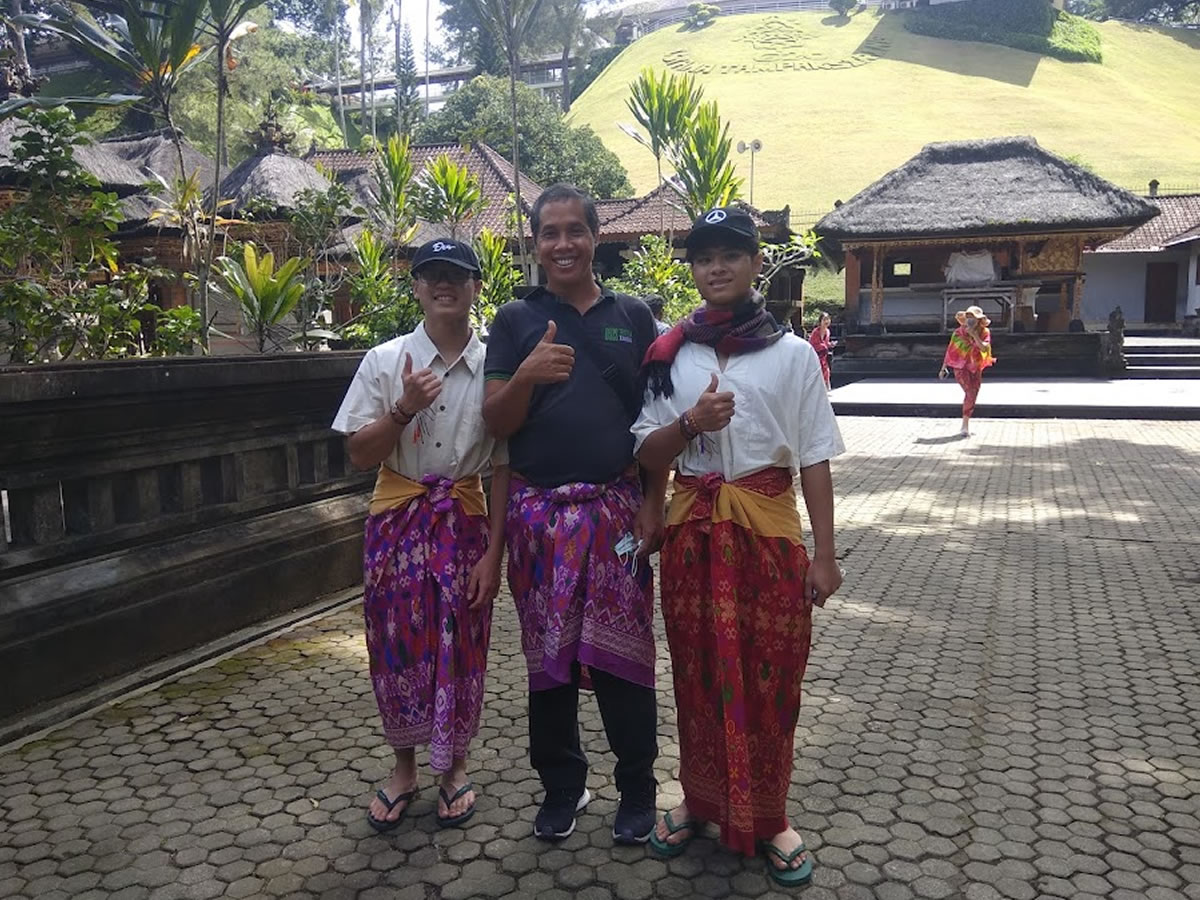
Pura Gunung Kawi Sebatu is a peaceful water temple located in the village of Sebatu, near Tegallalang and Tampaksiring. Despite its name, it is different from the more famous Gunung Kawi archaeological site. Built in the 11th century, Gunung Kawi Sebatu is known for its natural springs, crystal-clear pools, and tranquil atmosphere. The temple is considered one of Bali’s most beautiful hidden gems, offering a quieter experience than many of the island’s larger temples.
The ceremony anniversary at Pura Gunung Kawi Sebatu in Tegallalang, Gianyar, is celebrated annually during Purnama Sasih Kasa (the first full moon of the Balinese calendar, typically falling around July). This celebration serves as a sacred occasion to worship Lord Vishnu, the deity who presides over water and is the source of prosperity.
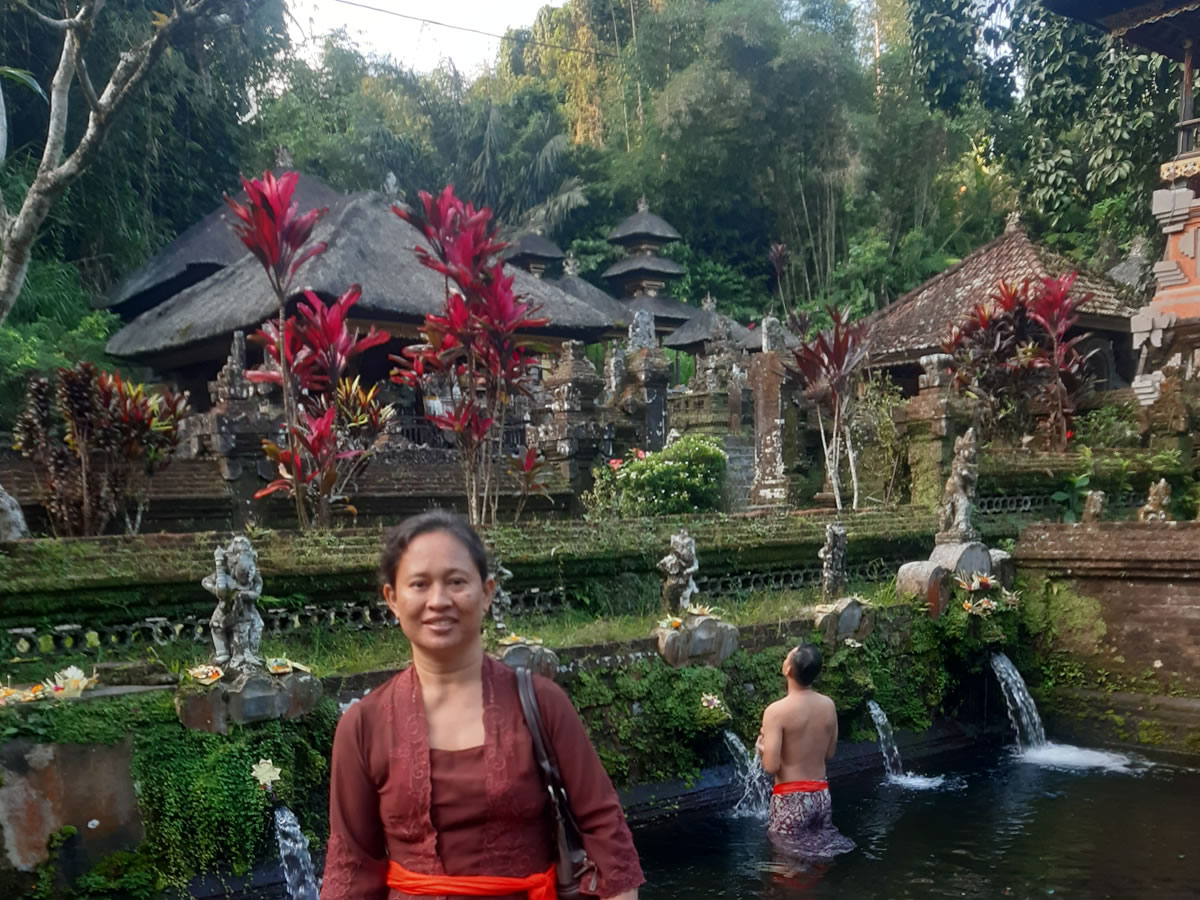
Pura Gunung Lebah is an ancient temple located at the western edge of central Ubud, near the start of the famous Campuhan Ridge Walk. Set at the confluence of the Wos rivers, the temple occupies a spiritually significant location that has long been considered sacred by the Balinese. Founded in the 8th century by the Javanese Hindu sage Rsi Markandeya, Pura Gunung Lebah is believed to be one of the earliest temples established in the Ubud area. The temple played an important role in the spread of Hinduism in Bali and is closely linked to the spiritual history of Ubud Village.
The ceremony anniversary at Pura Parahyangan Jagat Payogan Agung Gunung Lebah Tjampuhan in Ubud is celebrated every 210 days. The peak of the ceremony often falls on Budha Kliwon Sinta coinciding with the holy day of Pagerwesi involves numerous traditional villages, and features sacred traditions such as the Melasti ritual and Calonarang dance performances.
Email: info@baliubuddriver.com
Mobile within Bali dial 081-2395-6828
Mobile overseas dial 62-81-2395-6828
Whatsapp dial 62-81-2395-6828
Please contact us by WhatsApp for a quick response
Categories
- Ubud Activities (4)
- Ubud Attractions (13)
- Ubud Travel Guide (6)